Patients who research a facelift carefully tend to arrive at the same realization: the result depends far less on the skin than on the layer of muscle and connective tissue beneath it, called the SMAS. How a surgeon handles that layer is what separates a natural, lasting result from one that looks tight and fades within a year or two. Nationally recognized facelift surgeon Dr. Kiya Movassaghi has spent more than two decades refining his own approach to it, and he has now published that approach as a named technique, the U-SMAS lift, in Plastic and Reconstructive Surgery, the leading peer-reviewed journal in the specialty.
The publication is worth understanding before you choose a surgeon for your facelift. Dr. Movassaghi has described his method in enough detail for other surgeons across the country to study it, question it, and adopt it. For a Harvard-trained plastic surgeon who served as President of The Aesthetic Society, it is also simply the most recent entry in a long record of scholarship, one that now carries his name on a facelift technique.
What the SMAS is, and why it decides your facelift result
SMAS stands for the superficial musculoaponeurotic system: a continuous sheet of muscle and connective tissue that lies beneath the skin of the face and neck. A facelift that tightens skin alone pulls at the surface, and because skin stretches, that kind of result tends to loosen relatively quickly. A facelift that lifts and repositions the SMAS supports the deeper architecture of the face, which is why SMAS-based techniques tend to produce results that hold over time and can read as natural rather than pulled.
Surgeons have traditionally divided SMAS techniques into “low” and “high” approaches. Low-SMAS techniques are efficient and carry lower surgical risk, but they can leave the upper midface (the cheek and the area beneath the eyes) under-corrected. High-SMAS techniques address the midface and lower eyelids more completely, but they involve more extensive work that may be unnecessary. Dr. Movassaghi designed the U-SMAS lift to bridge that divide.
The U-SMAS lift: Dr. Movassaghi’s published technique
The U-SMAS lift is what Dr. Movassaghi and his co-authors describe as an imbricating, deep plane hybrid approach to the SMAS. It builds on well-established low-SMAS methods and adds a malar flap of mobile-only SMAS to rejuvenate the orbitomalar region—the transition between the lower eyelid and the cheek, where facial aging often first becomes visible.
In practical terms, Dr. Movassaghi’s method keeps the lower-risk foundation of a low-SMAS lift while adding a targeted maneuver that lifts the cheek and softens the transition from the lower eyelid into the midface—the benefit that ordinarily requires a higher-risk, high-SMAS technique. As the study in Plastic and Reconstructive Surgery puts it, the U-SMAS lift “harnesses the advantages of traditional low and high SMAS techniques while mitigating surgical risk.”
The U-SMAS lift builds on the safety of a low-SMAS approach and adds correction to the midface, an area that traditionally requires a higher-risk technique to address.
The outcomes reported in the study
Dr. Movassaghi’s study reviewed 61 U-SMAS lifts. Across those cases, the authors recorded a minor complication rate of 16.4 percent and no major complications, with a mean follow-up of 371 days, which is roughly a year of tracked results.
The paper concludes that the U-SMAS lift is, in the authors’ words, “a safe and powerful facial rejuvenation technique” for both surgeons early in their aesthetic careers and experienced facelift surgeons. For a patient weighing the decision, the takeaway is straightforward: this is a documented method with reported safety data behind it, not an unpublished in-house approach.
What the technique means for the midface and the eyes
The orbitomalar region, where the lower eyelid meets the cheek, is one of the earliest and most stubborn places facial aging shows. Hollowing beneath the eyes and flattening of the cheeks can leave a face looking tired even when the jawline and neck are still holding up well.
By adding a malar SMAS flap, Dr. Movassaghi’s U-SMAS lift is built to restore that midface region as part of the facelift itself, rather than treating it as a separate procedure. The patients this design serves best are those who want the cheek and under-eye area addressed, not only the jowls and neck. And because the technique restores volume and support to the midface, it is intended to age gracefully with the face over the years, not simply to look its best at the time of the six-month post-op photograph.
How the U-SMAS lift fits Dr. Movassaghi’s Eugene facelift approach
The U-SMAS lift is the technical foundation Dr. Movassaghi applies within his broader leveled facelift system, the three-tiered approach he uses to match the extent of surgery to each patient’s goals. A facelift with Dr. Movassaghi may be combined with a neck lift, a brow lift, or an eyelid lift, depending on which areas you wish to address, and the SMAS work described in his publication underpins the facial rejuvenation across all of those options.
His dual MD and DMD training gives him a depth of facial anatomical knowledge that is uncommon in the field, and it is part of why patients travel to his Eugene plastic surgery practice from Portland, Salem, and across Oregon for this kind of surgical detail. It is also why the consultation matters as much as the technique: Dr. Movassaghi reviews each face thoroughly and plans the operation around what will actually serve the patient, not around a single method applied to everyone.
Recovery depends on the extent of the procedure, and Dr. Movassaghi reviews an individualized plan with every patient at consultation. His facelift patients are generally advised to plan one to three weeks away from work, depending on their level of facelift, and to refrain from strenuous activity for four to six weeks.
Publishing the U-SMAS lift in Plastic and Reconstructive Surgery lets other board-certified surgeons study the technique and the outcomes behind it.
Frequently Asked Questions
- Related: SMAS vs. Deep Plane Facelift
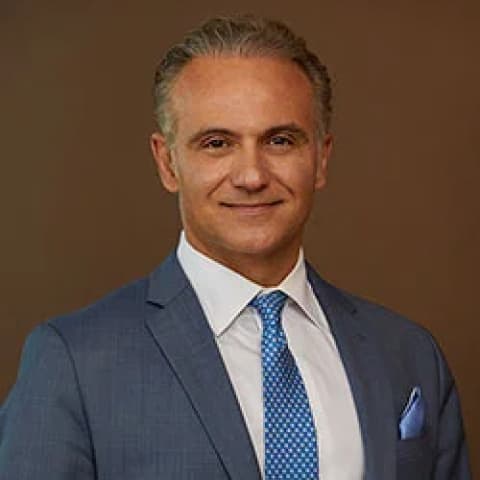
Dr. Kiya Movassaghi is a board-certified plastic surgeon with 20+ years of experience. He is nationally respected and has served as President of The Aesthetic Society. With his extensive surgical expertise and an exceptional aesthetic eye, he helps patients achieve stunning, natural-looking results.
Schedule a facelift consultation with Dr. Movassaghi
Nationally sought expertise. Local, personalized care. If you would like your facial rejuvenation performed by a board-certified plastic surgeon who has published his own technique in the specialty’s leading journal, schedule a consultation with Dr. Movassaghi at Movassaghi Plastic Surgery in Eugene, Oregon. Call (541) 686-8700 or contact the practice online to begin planning.
Reference:
Movassaghi, K., Check, J., & Gougoutas, A. (2024). The U-SMAS Lift. Plastic & Reconstructive Surgery, 155(4), 632–636. https://doi.org/10.1097/PRS.0000000000011673